Virtual commissioning: Find logic and sequence errors before FAT.
PLC-connected testing before physical commissioning.
We combine commissioning experience, automation knowledge, and digital models so your team can validate sequences, faults, HMI, and product flow while changes are still manageable.
Built on commissioning experience
We know where machine projects become expensive.
Virtual testing creates value because we understand PLC logic, machine behavior, FAT, startup, and the practical handover to operators and service teams.
PLC, sequence, and interface clarification
End-of-Line flow, variants, and fault scenarios
FAT, startup, and customer acceptance
Training, service, and reuse after delivery
Test the real machine logic in a digital environment.
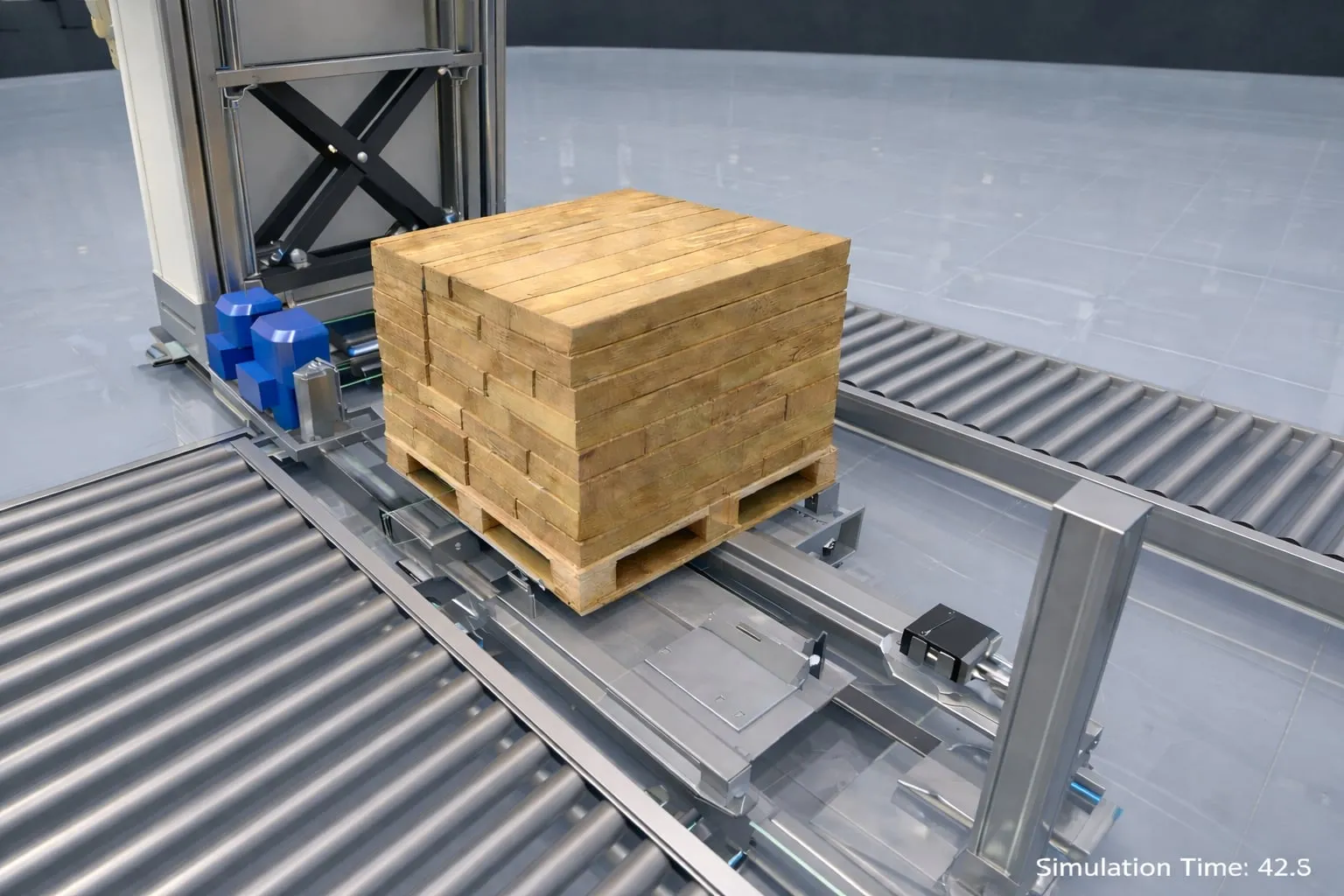
Many integration problems are discovered only when mechanics, software, and product flow meet on the factory floor. We build a digital test environment from your CAD, signals, and machine behavior so those dependencies become visible earlier.
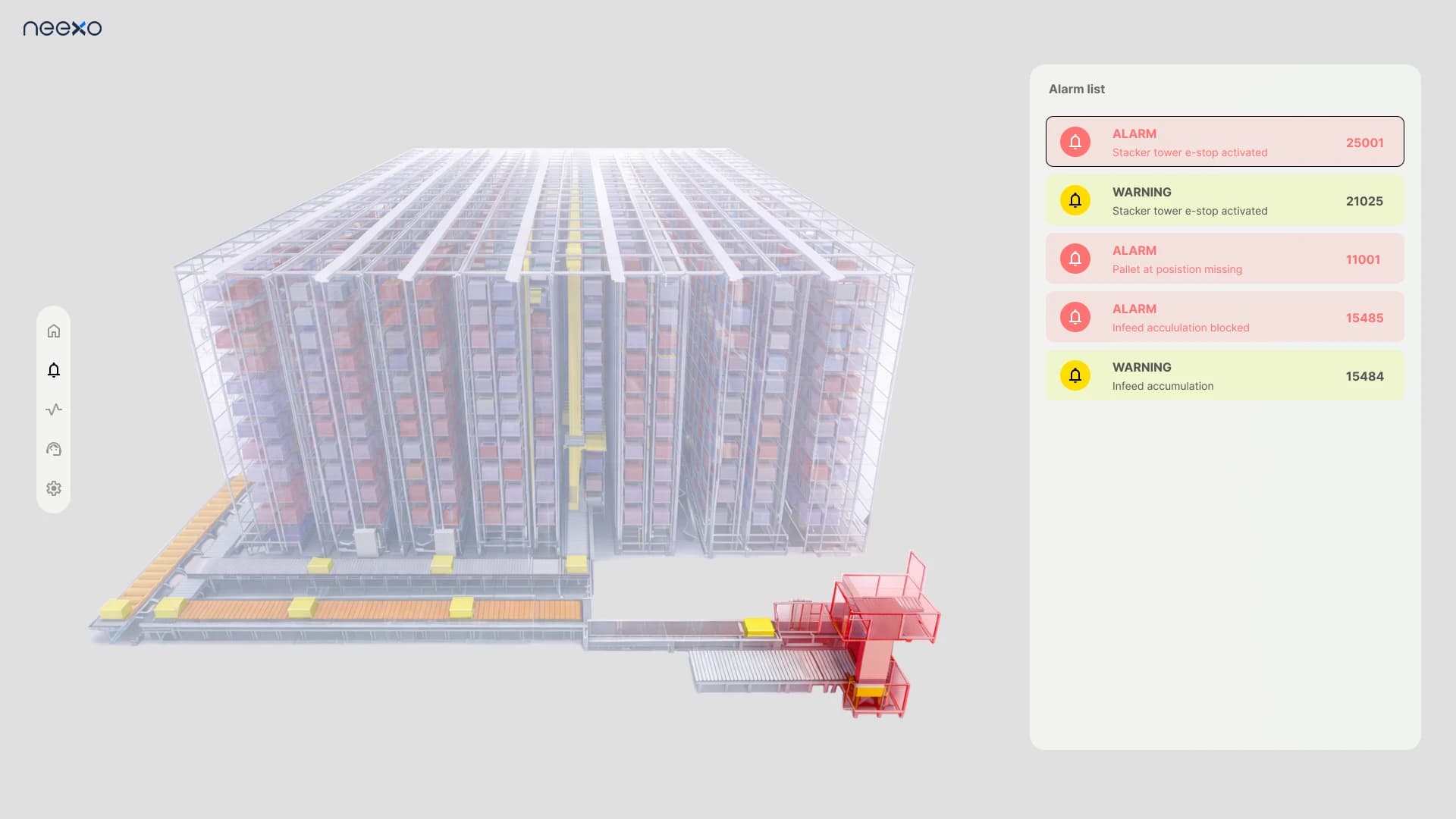
Your actual PLC logic is connected to the model. The team can test sequences, stops, faults, changeovers, and HMI interaction before physical startup, with a shared record of what passed and what still needs attention.
Use each environment for what it can prove
Move software risk earlier. Keep physical validation where it belongs.
Virtual commissioning is strongest when it removes avoidable discovery from the physical startup. It does not make the real machine, FAT or safety validation unnecessary.
Validate earlier in the digital model
- Sequences, modes and interlocks
- Fault handling and recovery paths
- HMI behaviour and operator flow
- Product flow and repeatable test scenarios
Confirm on the physical machine
- Real sensors, tolerances and material behaviour
- Wear, vibration and physical process variation
- Safety validation and hardware-specific behaviour
- Final performance and customer acceptance
How we build the virtual test environment
We build on data you already have
Data Import
A clarified model package based on CAD, diagrams, signals, variants, and test goals.
Physics & Kinematics
A behavioral model with motion, sensors, product flow, and the constraints that matter for testing.
Logic Connection
A testable connection to the actual PLC and HMI logic, including mapped signals and machine states.
Stress Test
Named scenarios, acceptance criteria, issue evidence, and a clear handover toward FAT.
New to virtual commissioning?
These guides explain the concepts before you scope a project or book a dialogue.
How to build a digital commissioning test plan
Named scenarios, pass criteria, and issue tracking before the customer arrives for FAT.
Read guideUnity digital twin for industrial machines
Why OEM teams use Unity for PLC-linked commissioning, motion, and operator context in one runtime.
Read guideWhat is virtual commissioning?
Definition, how it works in practice, and when the investment makes sense.
Read guideCalculate the business impact before you invest
Use our ROI calculator to estimate hours saved, commissioning cost, and net savings across development, FAT, and SAT, based on your project assumptions. Share scenarios with your team or export a PDF report.
Frequently Asked Questions
01Does it require a finished machine?
No. The value is greatest when we start in parallel with construction and can validate concepts before steel is ordered. A physical machine is not a prerequisite.
02Which PLCs do you support?
We scope each connection individually and have practical experience with platforms such as Siemens and Beckhoff. PLC brand, runtime, and interface affect the test setup, so we confirm your exact configuration before kickoff.
03What does virtual commissioning cost compared to physical rework?
Digital testing costs modeling time, but physical rework, site visits, and delayed FAT are often far more expensive. Use our ROI calculator to estimate net savings for your project.
04What is the difference between virtual FAT and physical FAT?
Virtual FAT tests logic, sequences, HMI, and fault scenarios digitally before the customer arrives. Physical FAT validates what requires real equipment: tolerances, wear, material, and sensor behavior. Read the virtual FAT vs physical FAT guide for a practical split.
05What cannot be tested virtually?
Physical wear, real material properties, production sensor tolerances, and some mechanical deviations still require physical validation. Virtual testing reduces risk early; it does not replace all physical FAT.
06What is the difference between Virtual Commissioning and a digital twin?
Virtual Commissioning is the process: testing logic, flow, and HMI digitally before startup. The digital twin is the test environment and model that makes it possible. The same model can often be reused for training and service after FAT.
07Do we need a written test plan for virtual commissioning?
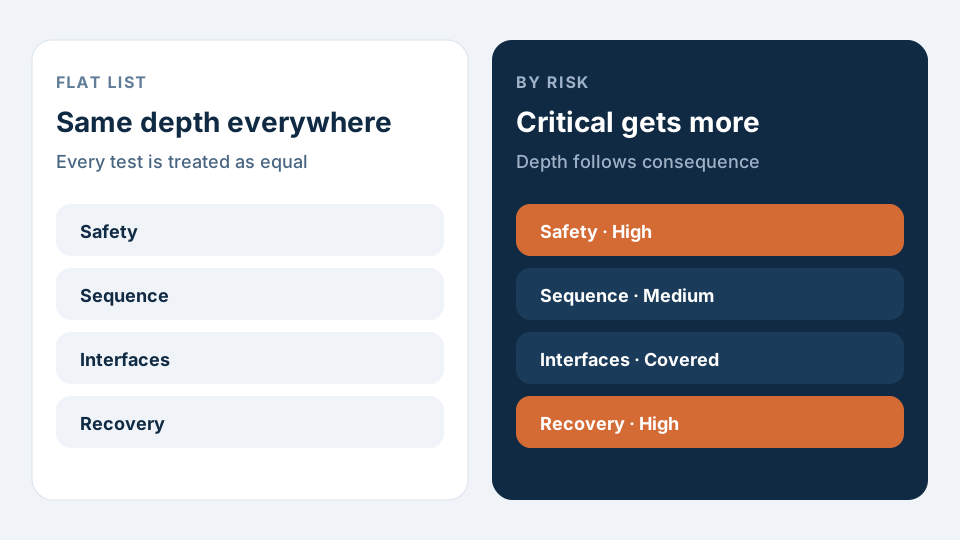
Yes, if you want repeatable evidence instead of one-off demos. A digital commissioning test plan names scenarios, pass criteria, and open issues so automation, mechanics, and project management share the same checklist. Read our guide to building a test plan for a practical structure.
Cases from this area
See how the competencies connect in practice.
What do you want to test before FAT or physical startup?
Bring the sequence, variant, or fault state creating the most uncertainty. We help scope what is worth moving into a digital test environment - and what still needs to be proven on the real machine.